SBA Loan Rejected? Here Is What Went Wrong and How to Build a Stronger Second Application
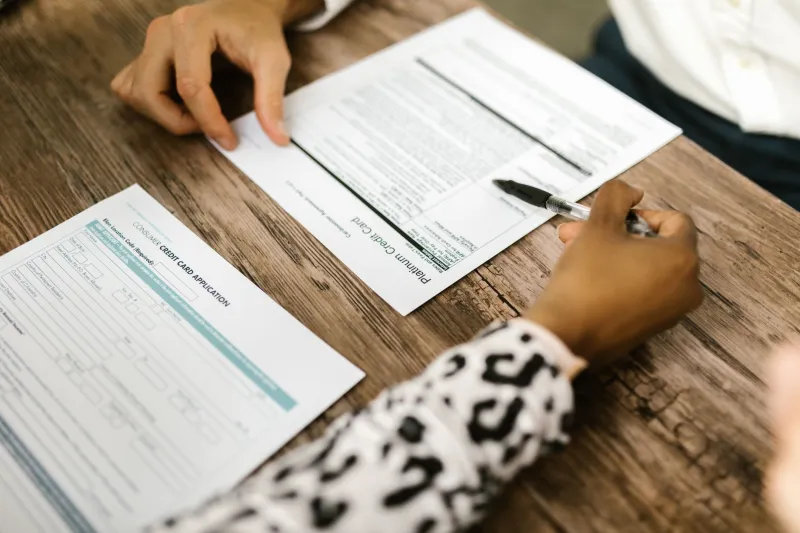
An SBA loan rejection letter is one of the more discouraging documents a small business owner can receive. After weeks of assembling paperwork, meeting with lenders, and imagining the growth that the capital would enable, a denial can feel like a definitive verdict on the business itself. It rarely is.
At Advance FinServ, our lending advisors regularly work with SME owners who have experienced SBA rejections and subsequently secured approval on a revised application. The pattern is consistent: most denials trace back to a finite set of correctable problems rather than irreparable business weaknesses. Understanding precisely why the application failed is the essential first step toward a successful second attempt.
Understanding the SBA Lending Framework
Before examining the specific failure points, it helps to understand how SBA lending actually works. The Small Business Administration does not typically lend directly to businesses. Instead, it guarantees a portion of loans made by approved lenders — banks, credit unions, and non-bank financial institutions — which reduces the lender's risk and enables financing that might not otherwise be available.
This structure means your application must satisfy two audiences simultaneously: the SBA's eligibility and underwriting standards, and the individual lender's internal credit criteria. A rejection may originate from either side, and the remediation strategy differs depending on which standards were not met.
Request a written explanation of the denial. Lenders are not always forthcoming with specifics, but you are entitled to ask, and the information is invaluable for rebuilding your application.
Reason One: Insufficient or Disorganized Financial Documentation
This is the single most common reason SBA applications are rejected at the preliminary review stage, and it is entirely preventable. Lenders reviewing an SBA application expect a complete, organized financial package. Missing documents, inconsistent figures across statements, or outdated records create immediate red flags.
A complete SBA financial package typically includes three years of business tax returns, three years of personal tax returns for all owners with 20% or greater equity, current profit and loss statements, a balance sheet dated within 90 days, and a detailed cash flow projection. Many applicants submit incomplete versions of this package or provide documents that do not reconcile with one another.
Remediation steps: Engage a professional accountant to compile and review your complete financial package before resubmission. Ensure that figures on your tax returns, internal financials, and bank statements are consistent and explainable. Any material discrepancy — even one with a legitimate explanation — should be accompanied by a written reconciliation note. Lenders are not investigators; they need you to make the story clear.
Reason Two: Debt Service Coverage Ratio Below the Threshold
The Debt Service Coverage Ratio (DSCR) is one of the most heavily weighted metrics in SBA underwriting. It measures your business's ability to cover its existing and proposed debt obligations from operating cash flow. Most SBA lenders require a minimum DSCR of 1.25, meaning your net operating income must be at least 125% of your total annual debt payments.
Applications fail this test for several reasons: the business is genuinely cash-flow constrained, the existing debt load is already high, or — frequently — the cash flow figures presented do not accurately reflect the business's true earning capacity because of the accounting errors described elsewhere in our editorial coverage.
Remediation steps: If your DSCR is below threshold, you have several options. First, reexamine whether your financial statements accurately reflect add-backs — owner's compensation above market rate, one-time expenses, non-cash charges like depreciation — that legitimately increase adjusted cash flow. Second, consider whether the loan amount can be reduced or the term extended to lower annual debt service. Third, use the intervening period to demonstrate improved cash flow through current financial statements before reapplying.
Reason Three: Weak or Poorly Structured Business Plan
Many SME owners underestimate the importance of the business plan in the SBA application process, particularly for loans being used for expansion, acquisition, or startup purposes. Lenders are not simply evaluating your past performance — they are assessing the plausibility of your future projections and the soundness of your strategy.
A weak business plan typically shares common characteristics: vague market analysis, revenue projections disconnected from any underlying assumptions, no discussion of competitive dynamics, and a use-of-funds section that lacks specificity.
Remediation steps: Rebuild your business plan with the lender's perspective in mind. For every revenue projection, document the specific assumptions driving it — customer acquisition rates, pricing, retention, and seasonality. Address competition directly and explain your sustainable advantage. The use-of-funds section should be line-item specific: lenders want to know exactly how each dollar will be deployed and how that deployment generates the revenue that will service the debt.
Reason Four: Collateral Deficiencies
SBA loans, particularly the flagship 7(a) program, require lenders to collateralize loans to the extent possible. When the loan amount exceeds the available collateral value, lenders may decline rather than accept the unsecured exposure — even if the business's cash flow is adequate.
Common collateral problems include real estate with insufficient equity, equipment that has depreciated significantly, and business assets that are difficult to liquidate. Personal assets, including primary residences, are frequently required as collateral for SBA loans when business assets are insufficient.
Remediation steps: Request a clear breakdown of how the lender valued your collateral and where the shortfall exists. In some cases, a professional appraisal can establish higher values than the lender's internal estimates. Additionally, explore whether additional collateral — equipment, receivables, or real property not previously offered — can close the gap. If collateral remains a persistent obstacle, SBA microloans or alternative lending programs with different collateral requirements may be more appropriate vehicles.
Reason Five: Credit Score and Credit History Issues
Both business credit history and the personal credit profiles of owners with 20% or greater equity are scrutinized in SBA underwriting. A personal FICO score below 650 — and for many lenders, below 680 — will create significant headwinds regardless of the business's financial performance. Derogatory marks such as prior bankruptcies, tax liens, or judgments are particularly problematic.
Remediation steps: If credit is the issue, reapplication should be deferred until meaningful credit improvement has been achieved. This typically requires a minimum of six to twelve months of disciplined credit management: eliminating outstanding tax liens, reducing revolving credit utilization below 30%, and ensuring no new derogatory marks appear. During this period, work with an advisor to document the steps you have taken — lenders view demonstrated improvement favorably.
Building Your Second Application Strategically
A second SBA application is not simply a resubmission of the first. It is an opportunity to present a fundamentally stronger case, informed by the specific feedback from your initial denial.
Before reapplying, consider whether the same lender is the right choice. Different SBA-approved lenders have different credit appetites, industry preferences, and underwriting overlays on top of SBA standards. Working with a lending advisor who has relationships across multiple SBA lenders — as the team at Advance FinServ does — can help you identify the institution most likely to view your application favorably.
The most successful second applications share a common trait: they anticipate the lender's concerns and address them proactively, rather than waiting for questions to arise during underwriting. Transparency, documentation, and a coherent narrative are your most powerful tools.
If you have received an SBA rejection and are planning your next steps, Advance FinServ's lending advisory team is available to conduct a pre-application review, identify remaining weaknesses, and help you position your business for a successful outcome.